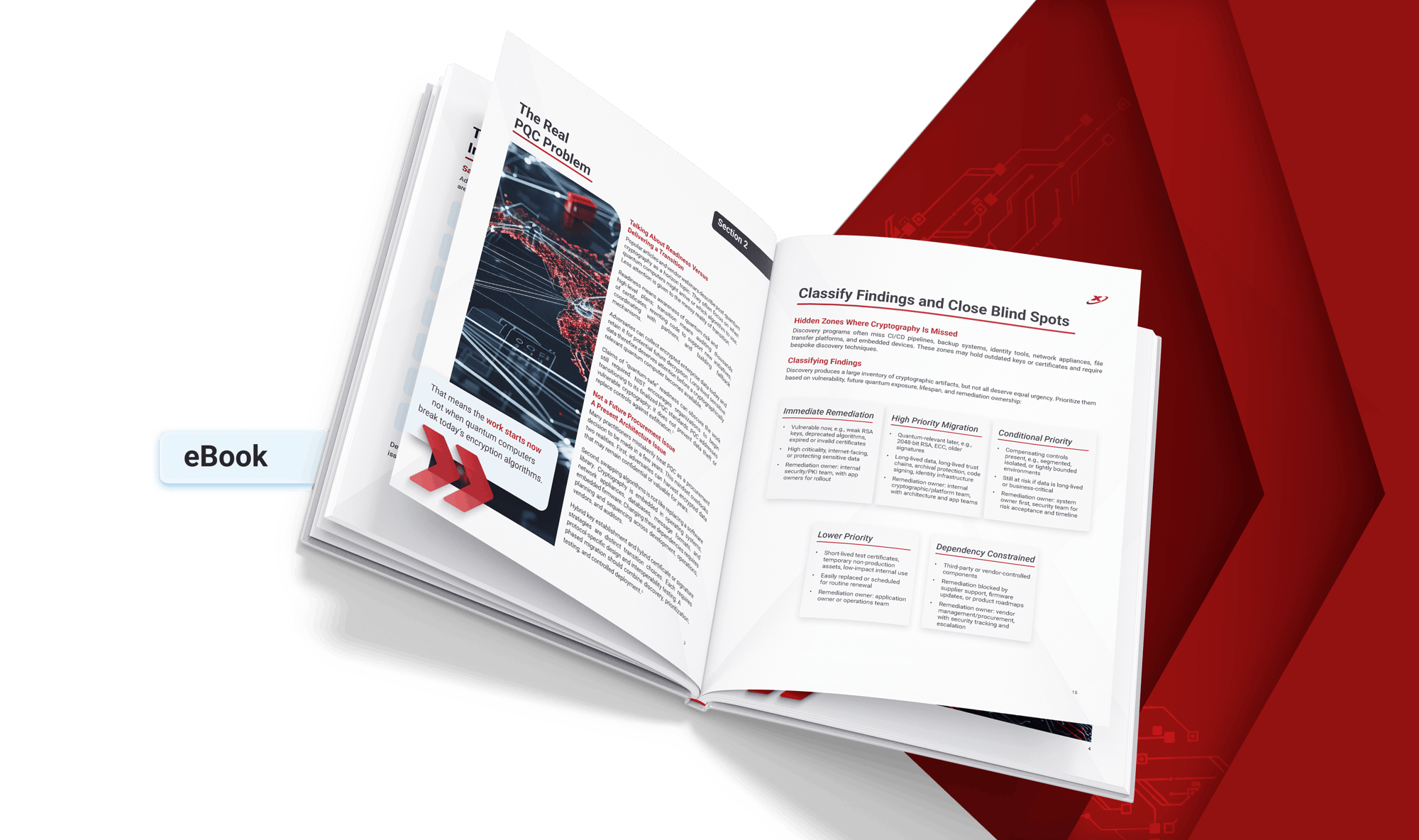
What You'll Learn and Why It Matters
1. Understand NIST's PQC standards and transition timelines
Learn what FIPS 203, 204, and 205 standardize, how NIST's transition guidance informs planning, and why deadlines differ across federal systems and other organizations.
Why it matters: Build your transition strategy around applicable requirements and technical priorities rather than a one-size-fits-all deadline.
2. Discover Where Your Cryptography May Be Vulnerable
Explore how public-key cryptography is used across applications, certificates, networks, devices, and third-party services. Understand the risks of Harvest Now, Decrypt Later and the importance of identifying cryptographic dependencies.
Why it matters: Know what you have, where it is used, and which systems require further assessment before planning changes.
3. Determine What to Migrate First
Learn how to prioritize systems based on data sensitivity, confidentiality requirements, trust dependencies, and implementation risk.
Why it matters: Focus early assessments on the systems that warrant attention instead of attempting to replace every cryptographic component at once.
4. Evaluate Architecture, Testing, and Migration Options
Explore the roles of hardware security modules, key management, cryptographic agility, and supported hybrid approaches. Understand the performance, interoperability, and recovery questions to evaluate before production changes.
Why it matters: Identify technical trade-offs early and develop a phased transition approach grounded in testing.
5. Establish priorities for your PQC transition
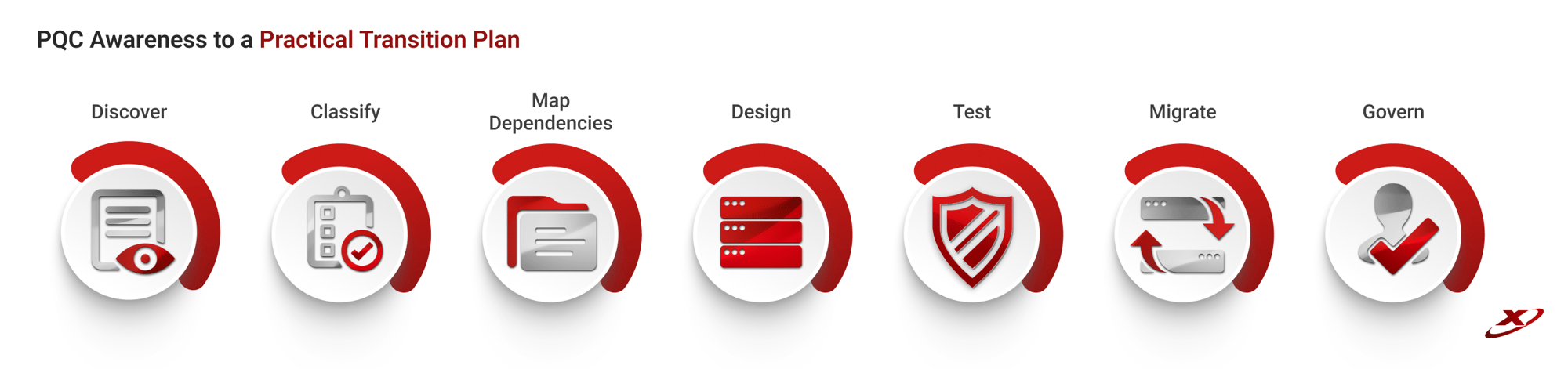
Use the guide's seven-stage transition model, vendor due diligence questions, enterprise roadmap guidance, and readiness checklist to organize your next steps.
Why it matters: Give security, architecture, IT operations, and procurement teams a shared basis for planning and evaluating progress.
From PQC Awareness to a Practical Transition Plan
Selecting new algorithms is only one part of the transition. Cryptographic dependencies extend across applications, infrastructure, certificates, devices, and external services.
The eBook presents a seven-stage model to help teams organize the work: